Oct 9, 2026

Construction sites in the Tahoe Basin must be winterized between October 15 and May 1 every year to protect the lake’s clarity from erosion and sediment. Photo by TRPA
LAKE TAHOE, Nev./Calif. – The Tahoe Regional Planning Agency (TRPA) is reminding property owners and contractors that the annual grading and digging season for permitted projects will close Thursday, October 15, 2026. All construction sites must be winterized from October 15 to May 1 each year to protect Lake Tahoe’s famed water clarity.
The long-standing requirement helps prevent sediment from washing into stormwater systems and the lake. Disturbing or compacting soil during Tahoe’s wettest time of year can harm lake clarity and increase algal growth. TRPA’s winterization requirements are available on trpa.gov/applications-forms/winterization-guidelines.
The agency may permit grading season exceptions under special circumstances such as public health, safety, or water quality emergencies. The application for an exception is available at trpa.gov/inspections-and-securities. Applications can be submitted beginning October 12, 2026.
Some digging activities are considered exempt and do not require TRPA approval. The exemption applies year-round, but to remain exempt, these activities must adhere to water quality standards and continue only during dry conditions. When a site is wet or covered with snow, work must stop and the site must be stabilized following the winterization guidelines at the link above. A list of exempt projects is under “How do I know if I need a permit?” at trpa.gov/frequently-asked-questions.
The grading and digging season for permitted projects at Lake Tahoe will open again May 1, 2027.
Oct 7, 2026
Slider image credit: Erika Veidis
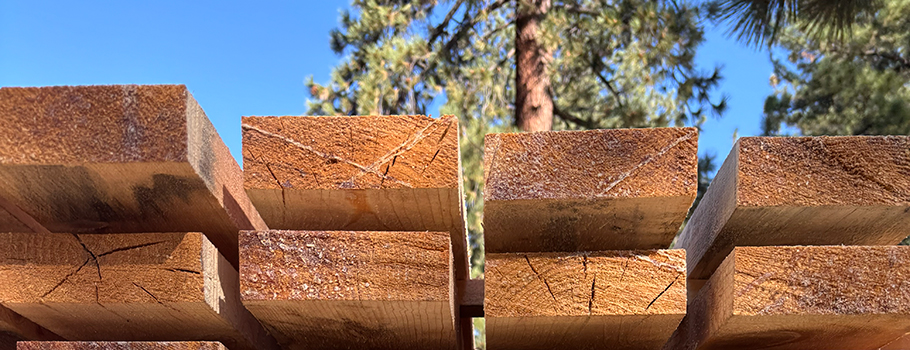
LAKE TAHOE, Nev./Calif. — The Tahoe Regional Planning Agency (TRPA) is leading a new Trees to Transit project that kicked off last week with a hands-on tree milling demonstration at the Lake Tahoe Community College (LTCC) for local students that will provide the materials to build a new bus shelter on the South Shore, planned for next year.

Experts from Cody’s Tree Service prepare South Tahoe High Career Technical Education students for a tree-milling demonstration at Lake Tahoe Community College on Oct. 1. Photo by Thea Schwartz
The project aims to integrate forest health and wildfire mitigation, local wood utilization, workforce development, and public transportation, according to the agency.
More than 100 high school and community college students took part in the milling demonstration by Cody’s Tree Service at LTCC last Thursday. Participants got to see firsthand how trees can become usable lumber and how forest products can be used locally.
“It’s cool to follow the whole process,” one of the Career Technical Education student participants said. “We’re learning about forest health this fall, seeing how the trees are milled, and then we’ll get to build the bus shelter ourselves in the spring. It’s really cool to see how everything connects and know that we’ll take part in turning these trees into something our community can use.”
Trees to Transit brings together TRPA, the Tahoe Wood project, the Tahoe Transportation District (TTD), and local education and industry partners to demonstrate how trees removed through local forest health projects can be used to create community infrastructure. The trees used in Thursday’s milling demonstration came from the future site of LTCC’s Public Safety Training Complex, which will support forestry and wildfire career education programs when it opens next year.
The lumber produced through the demonstration project is planned for a new bus shelter for TTD’s Route 50 in South Lake Tahoe that is to be constructed by students in the South Tahoe High School Construction Career Technical Education program, with installation anticipated in spring 2027.
“This project connects two important needs in the Tahoe Basin,” Kira Richardson, senior transportation planner at TRPA, said. “We have trees being removed as part of forest health work and a need for more transit shelters throughout the basin. Trees to Transit creates a pathway between those two needs, turning locally sourced material into infrastructure that makes taking transit more comfortable and accessible.”

Students got hands-on experience while learning how trees can become usable lumber and how forest products can be used locally. Photo by Thea Schwartz
Bus shelters provide important passenger amenities, including shade in the summer, protection from the elements, increased visibility of transit stops, access to rider information, and greater comfort while waiting for a bus. Though only about 30 percent of TTD bus stops currently have a shelter, and procuring, constructing, and installing a bus shelter can cost more than $100,000, according to TTD.
The goal of Trees to Transit is to help bring more shelters to the regional transit network while supporting forest health projects, career education, and the local economy. The project is funded through California SB 125, which provides funding for transit capital and operational needs.
“We are deeply grateful to the many partners, students, and community members who came together to make the milling demonstration a success,” Richardson added. “This partnership is providing a model for the basin to bring forest management, wood manufacturing, and community infrastructure together.”
The milling demonstration was co-organized by the Tahoe Regional Planning Agency, Lake Tahoe Community College, South Tahoe High School, Cody’s Tree Service, Sierra Business Council, Tahoe Resource Conservation District, and the Tahoe Wood initiative—a multi-partner project focused on strengthening a local wood economy that advances forest restoration, wildfire risk mitigation, and community resilience across Tahoe. Tahoe Wood receives support from the Tahoe Prosperity Center, Tahoe Earth Institute, Berkeley Wood Lab, and North Tahoe Community Alliance TOT-TBID Dollars at Work program.
###
About TRPA
The Tahoe Regional Planning Agency leads the cooperative effort to preserve, restore, and enhance the unique natural and human environment of the Lake Tahoe Region while improving local communities and people’s interactions with the environment. Contact: Public Information Officer Eric Cachinero at (775) 589-5252.
About Tahoe Wood
A collaboration between the Tahoe Prosperity Center, Tahoe Earth Institute, and Berkeley Wood Lab, Tahoe Wood is a Tahoe-based initiative connecting forest restoration with a stronger local wood economy, catalyzing pathways for the trees felled in our backyards to be turned into local products. Tahoe Wood is mapping regional wood supply and demand, identifying opportunities for small-scale manufacturing, supporting entrepreneurs and workforce development, and building partnerships across the forest-products supply chain. Their goal is to help more of the wood removed through forest restoration become useful local products—keeping economic value in the Tahoe region while supporting healthier forests and resilient communities. This project is supported by the North Tahoe Community Alliance‘s TOT-TBID Dollars at Work program, which funds programs and projects that promote community vitality, environmental stewardship, and economic health in North Lake Tahoe. Learn more at tahoeearthinstitute.org/tahoewood. Contact: Erika Veidis, [email protected].
About Tahoe Transportation District
The Tahoe Transportation District (TTD) is a bi-state agency responsible for the management and implementation of safe, environmentally sound, multi-modal transportation projects and programs in the Lake Tahoe Region, including transit operations. TTD leads multi-jurisdictional infrastructure projects to make travel safer, improve access to recreation, and reduce traffic congestion and private car use. TTD focuses on transit’s pivotal role in improving air and water quality because more than 70 percent of the pollutants impacting Lake Tahoe’s clarity come from transportation system and built environment run-off. TTD has delivered numerous projects to help reduce environmental impacts and address the high demand residents and visitors place on the region’s transportation infrastructure, including transit solutions, roadway and safety enhancements, water quality improvements, and pedestrian/cyclist paths. For more information, please visit TahoeTransportation.org. Contact: Public Information Officer Tiara Wasner, [email protected] (775) 589-5504.

Oct 6, 2026
LAKE TAHOE, Nev./Calif. – The Tahoe Regional Planning Agency (TRPA) is inviting Lake Tahoe residents, workers, commuters, and visitors to participate in a survey to help create a more resilient transportation system. The information gathered will help partners strengthen Lake Tahoe’s transportation and emergency communications systems during hazardous events.
- Take the survey: trpa.gov/ResilientTransportation
- Participants who complete the survey and provide their contact information may enter to win a $100 Safeway gift card.
Lake Tahoe is increasingly prone to wildfires, severe winter storms, flooding, and landslides, creating challenges for people and the region’s transportation system. The survey asks participants to share how these potential extreme weather events affect their travel, the transportation challenges they experience, and how they prefer to receive information during emergencies.
The project is a key component of Connecting Tahoe: Strengthening Transportation Resilience—a regional transportation resilience and communications planning effort focused on delivering safety and environmental benefits for the Tahoe Region. The resulting plan will help create a safer, more reliable transportation system and support regional partners in emergency response and evacuation. Survey responses will help identify long-term strategies and investments to improve Tahoe’s transportation infrastructure for residents and visitors during a natural disaster.
This project is federally funded through the Promoting Resilient Operations for Transformative, Efficient, and Cost-Saving Transportation (PROTECT) Program. The final plan is anticipated to be completed in late 2027.
Visit Connecting Tahoe: Strengthening Transportation Resilience to take the survey, learn more about the project, and get involved.
Oct 2, 2026

TRPA Public Information Officer Eric Cachinero. Photo by Jeff Cowen.
LAKE TAHOE, Nev./Calif. – The Tahoe Regional Planning Agency (TRPA) welcomed Eric Cachinero as its new Public Information Officer this week, bringing more than a decade of experience in media, public relations, and government communications to the role.
Cachinero will lead public information efforts for TRPA, including community correspondence, strengthening partnerships, and helping communicate the agency’s work.
“Eric brings a valuable combination of journalism experience, public-sector communications expertise, and a genuine connection to the people and places of the Tahoe Region,” TRPA Executive Director Julie Regan said. “His experience and personal connection to Lake Tahoe will be an asset as TRPA continues to communicate its work and engage with communities throughout the Tahoe Basin.”
A native Nevadan, Cachinero grew up in Sparks and earned a bachelor’s degree in print journalism from the Reynolds School of Journalism at the University of Nevada, Reno.
Prior to joining TRPA, Cachinero served as Community Relations Manager/Public Information Officer for Douglas County. He previously served nearly two years as a Public Information Officer with the Nevada Department of Wildlife and spent eight years as an Associate Editor with Nevada Magazine/Travel Nevada.
Throughout his career, Cachinero has traveled extensively across Nevada and California, developing a deep familiarity with their communities, landscapes, and people. His work has centered on telling stories about the places that make Nevada and the Sierra Nevada unique and helping people connect with the public agencies that serve them.
That connection to the region extends well beyond his professional work. Cachinero is the author of “Odyssey of a Ghost Town Explorer,” a 12,000-mile account of his adventures and misadventures exploring Nevada’s historic ghost towns. An avid outdoorsman, he has also thru-hiked both the Tahoe Rim Trail and the Pacific Crest Trail, experiences that have given him a personal connection to Lake Tahoe, the Sierra Nevada, and the communities that surround them.
“I’m honored to join TRPA and to have the opportunity to help protect and enhance one of the most remarkable places in the world,” Cachinero said. “I look forward to bringing my experience in media and public service to a unique agency with a mission close to my heart.”
Jeff Cowen, formerly TRPA’s public information officer, has been selected as the agency’s Community Relations Manager. In this role, Cowen will focus on implementing the priorities of the Permitting and Compliance Department, with an emphasis on the agency’s Shoreline Plan.
###
The Tahoe Regional Planning Agency leads the cooperative effort to preserve, restore, and enhance the unique natural and human environment of the Lake Tahoe Region while improving local communities and people’s interactions with the environment. Contact Public Information Officer Eric Cachinero at (775) 589-5252.